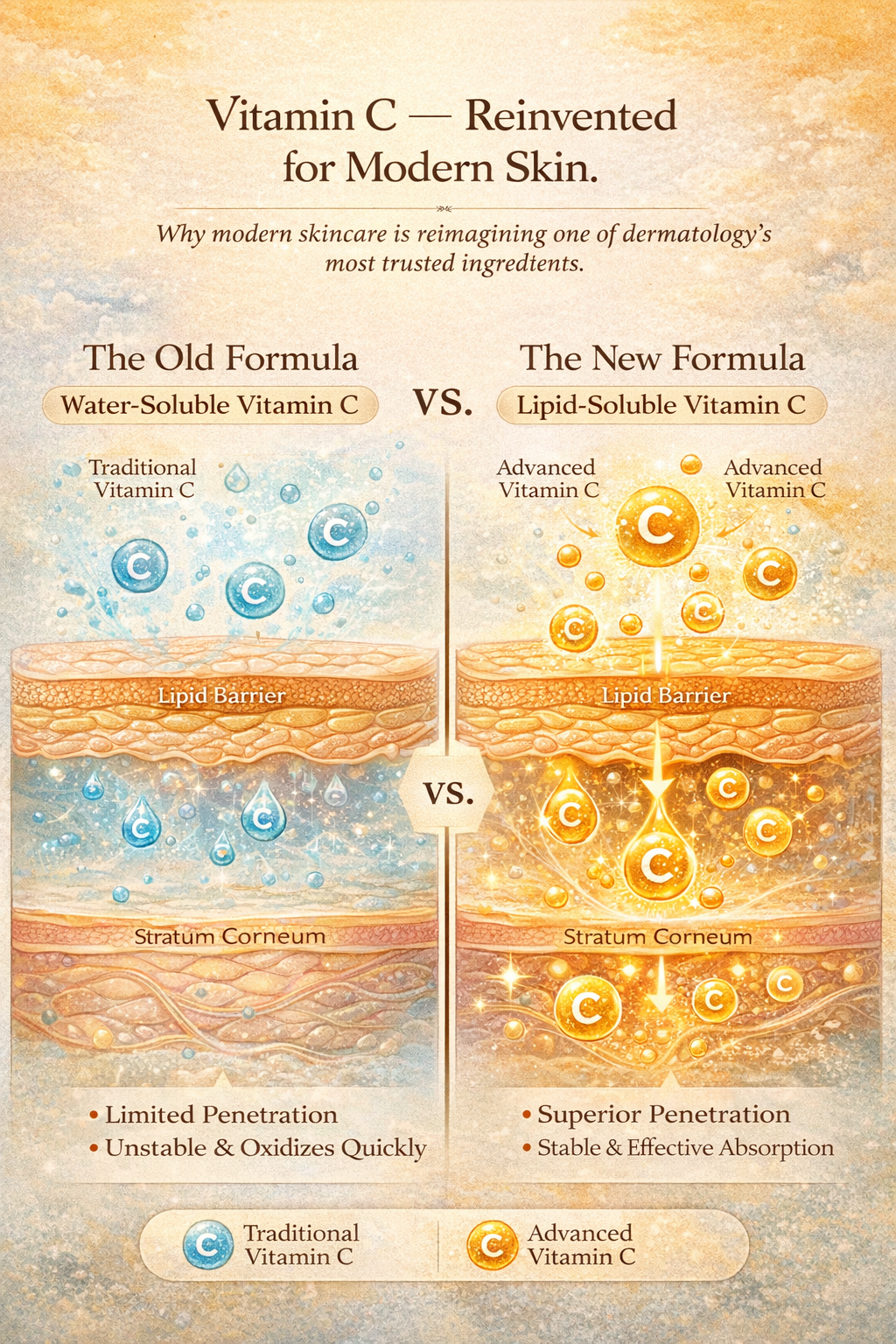
Why modern skincare is reimagining one of dermatology’s most trusted ingredients.
If you studied medicine, pharmacy, or any health-related science, you may begin reading this with a hint of scepticism.
After all, you were taught something very clearly:
Vitamin C is water-soluble.
It dissolves in water, circulates in the bloodstream, and whatever the body does not use is excreted.
Simple. Clean. Definitive.
So when someone mentions fat-soluble Vitamin C, the instinctive reaction is often:
That doesn’t exist.
And in a strict nutritional sense, that’s true.
But skincare science tells a slightly more interesting story.
Because while Vitamin C itself is naturally water-soluble, modern cosmetic science has quietly developed sophisticated ways of helping it move through environments where water-loving molecules would normally struggle.
The Classic Vitamin C
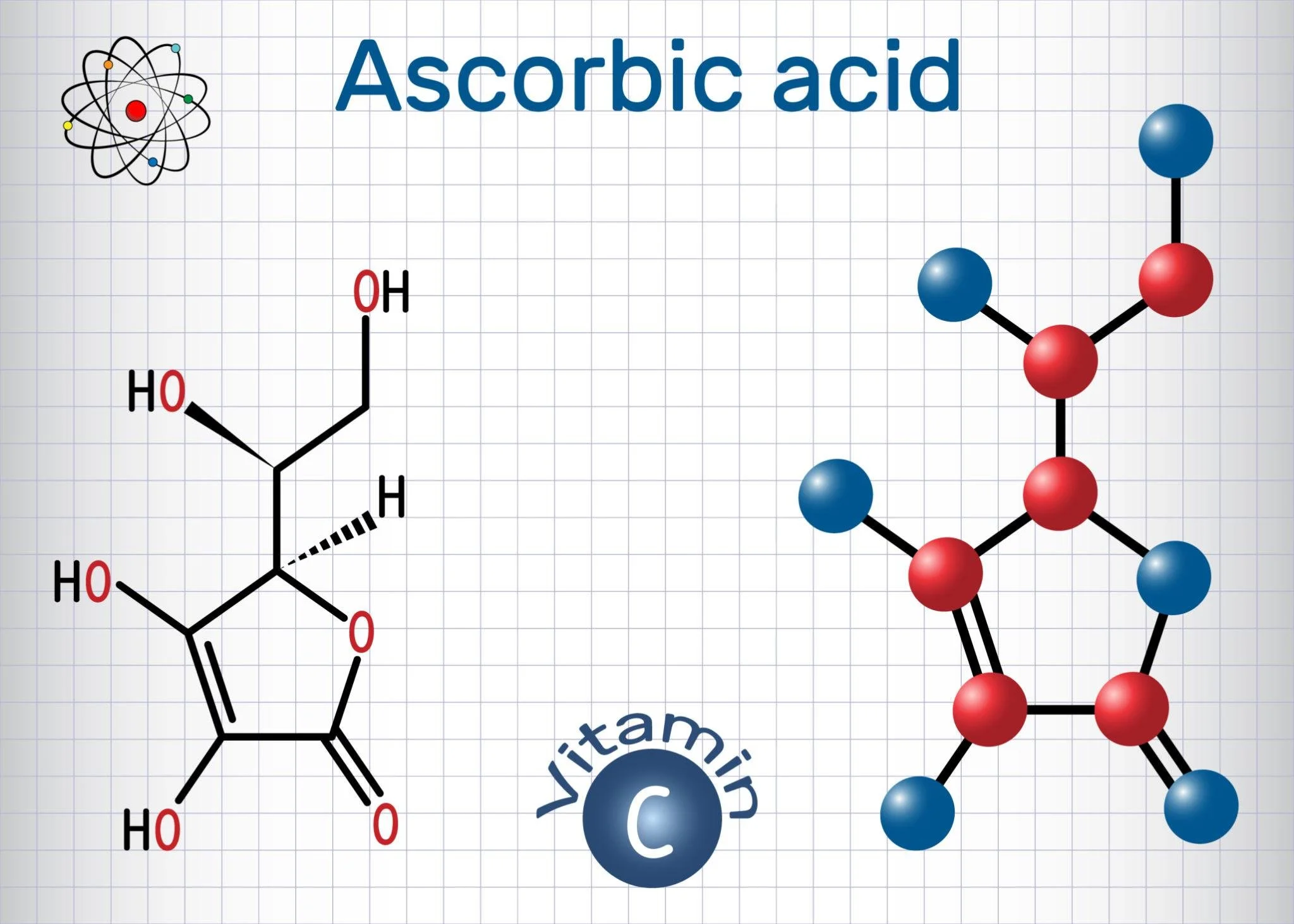
The natural form of Vitamin C is ascorbic acid.
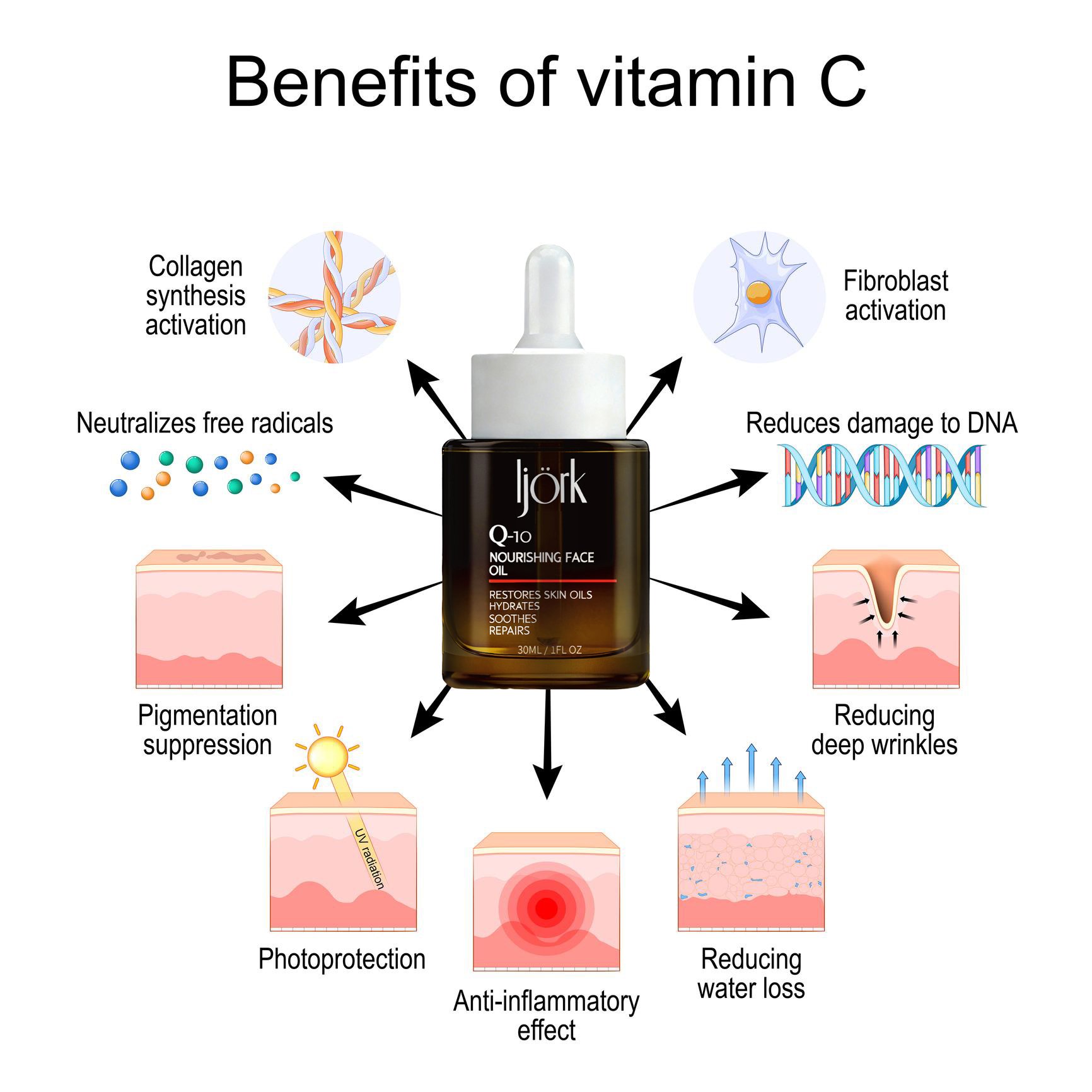
Few ingredients have earned their reputation in skincare quite like this one. It plays a central role in collagen synthesis, supports the skin’s defence against oxidative stress, and contributes to the luminous clarity we associate with healthy, vibrant skin.
But chemically, Vitamin C has one defining characteristic:
it loves water.
Inside the body, this works beautifully. In the bloodstream, water solubility allows Vitamin C to travel efficiently to the tissues that need it.
On the surface of the skin, however, the situation is different.
The outermost layer of the skin — the stratum corneum — is rich in lipids, oils, and fatty molecules that form a protective barrier.
And as everyday experience reminds us:
Oil and water simply do not mix.
Because of this, traditional Vitamin C often struggles to penetrate deeply into the skin.
It also has several well-known limitations:
Limited penetration through the lipid barrier
Instability when exposed to air and light
Low-pH formulations that may irritate sensitive skin
This led scientists to ask an important question:
What if Vitamin C could move more comfortably through fat?
Enter Liposoluble Vitamin C
Instead of changing what Vitamin C does, scientists changed how the molecule travels.
By attaching lipid components — often derived from fatty acids such as palmitates — researchers created derivatives such as Ascorbyl Palmitate and Ascorbyl Tetraisopalmitate.
These modified forms behave very differently from traditional Vitamin C.
They integrate more comfortably into the skin’s lipid environment, allowing them to move through the barrier more efficiently.
A classic ingredient — redesigned for modern skin science.
These liposoluble forms offer several advantages:
• Greater compatibility with the skin barrier
• Improved penetration into lipid-rich layers
• Increased stability in formulations
• Reduced irritation compared with acidic forms of Vitamin C
Once inside the skin, natural enzymes gradually convert these molecules back into active Vitamin C, allowing them to support collagen production, neutralise oxidative stress, and restore radiance.
Only now, the molecule arrives where it is needed most.
Why You Probably Never Heard About It
In nutritional science, Vitamin C is — and always will be — classified as water-soluble.
That fundamental principle remains unchanged.
But cosmetic science focuses on something different: delivery.
It is not only about what an ingredient does. It is about how effectively it can reach the cells that need it.
Liposoluble Vitamin C does not redefine the vitamin.
It simply improves how we use it.
Modern skincare is not just about ingredients — it is about intelligent delivery.
Why It Matters for Your Skin
If you have ever tried a Vitamin C serum that oxidised quickly, irritated your skin, or failed to deliver the glow you expected, the issue may not have been Vitamin C itself.
The issue may have been how it was delivered.
Liposoluble derivatives offer:
• Greater formulation stability
• Improved penetration through lipid barriers
• A smoother, more elegant texture
• Better compatibility with sensitive skin
They represent a thoughtful evolution of one of skincare’s most trusted ingredients.
Where Beauty Meets Biochemistry
Science rarely progresses by abandoning what works.
More often, innovation comes from refining the classics.
Vitamin C remains water-soluble by nature. But through intelligent molecular design, scientists have created forms that travel more comfortably through the skin’s lipid world — improving stability, penetration, and performance.
Sometimes the most powerful beauty innovations are not new discoveries — but smarter versions of what we already trust.
The ljörk Approach
At Ljörk, we believe skincare should reflect both biological understanding and formulation intelligence.
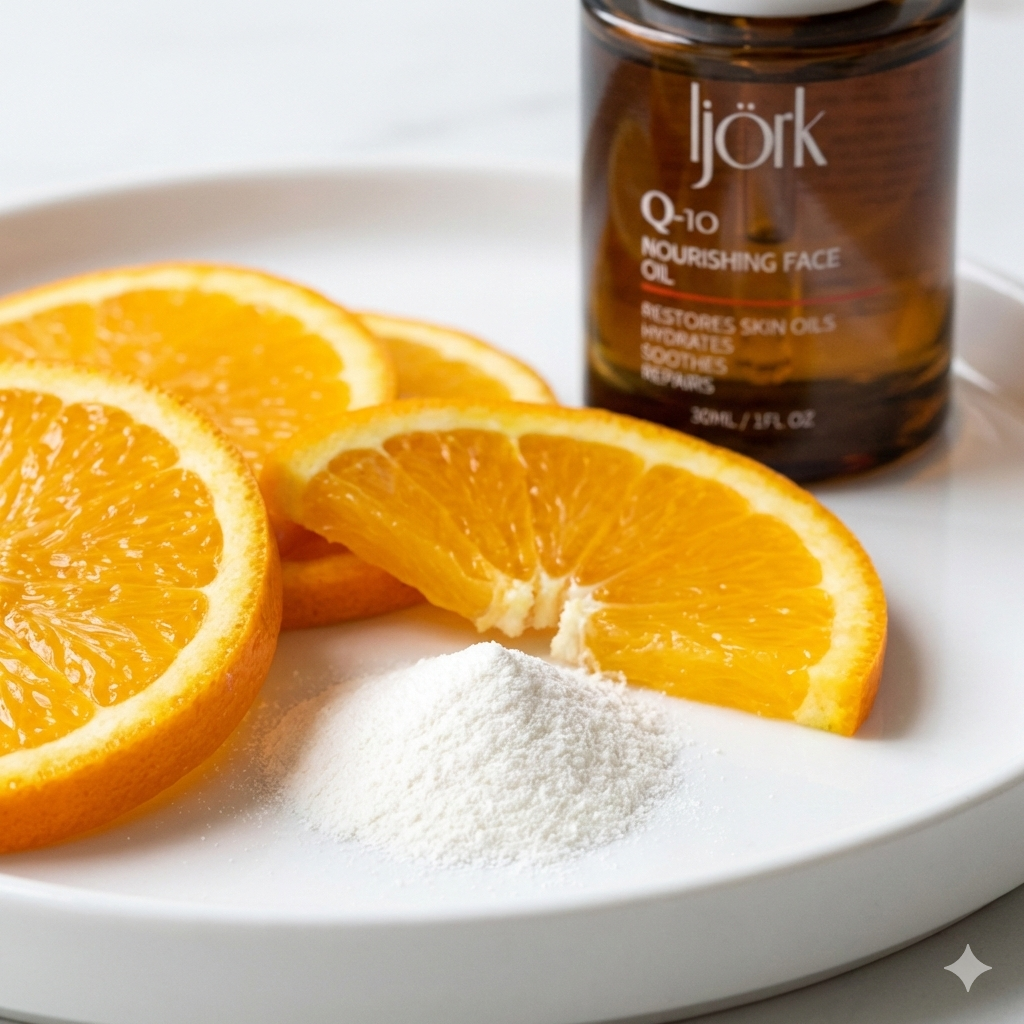
That philosophy is why we incorporate advanced liposoluble Vitamin C derivatives in formulations such as our Q-10 Face Oil. By combining antioxidant protection with lipid-compatible delivery systems, the goal is simple: to help powerful ingredients reach the skin where they can perform at their best.
Because true skincare innovation does not come from chasing trends.
It comes from understanding the science of skin.