At the medical school we are taught Vitamin C is the “Queen” of the vitamins, and in fact it has long been hailed as the “holy grail” of skin health. It appears in almost every successful skincare formulation — and for good reason. Known scientifically as ascorbic acid, Vitamin C is not a passing trend or marketing buzzword. It is a biological necessity for maintaining firm, resilient, and youthful-looking skin.
Few ingredients in skincare have earned their reputation as honestly as Vitamin C.
How Vitamin C Supports Skin Biology
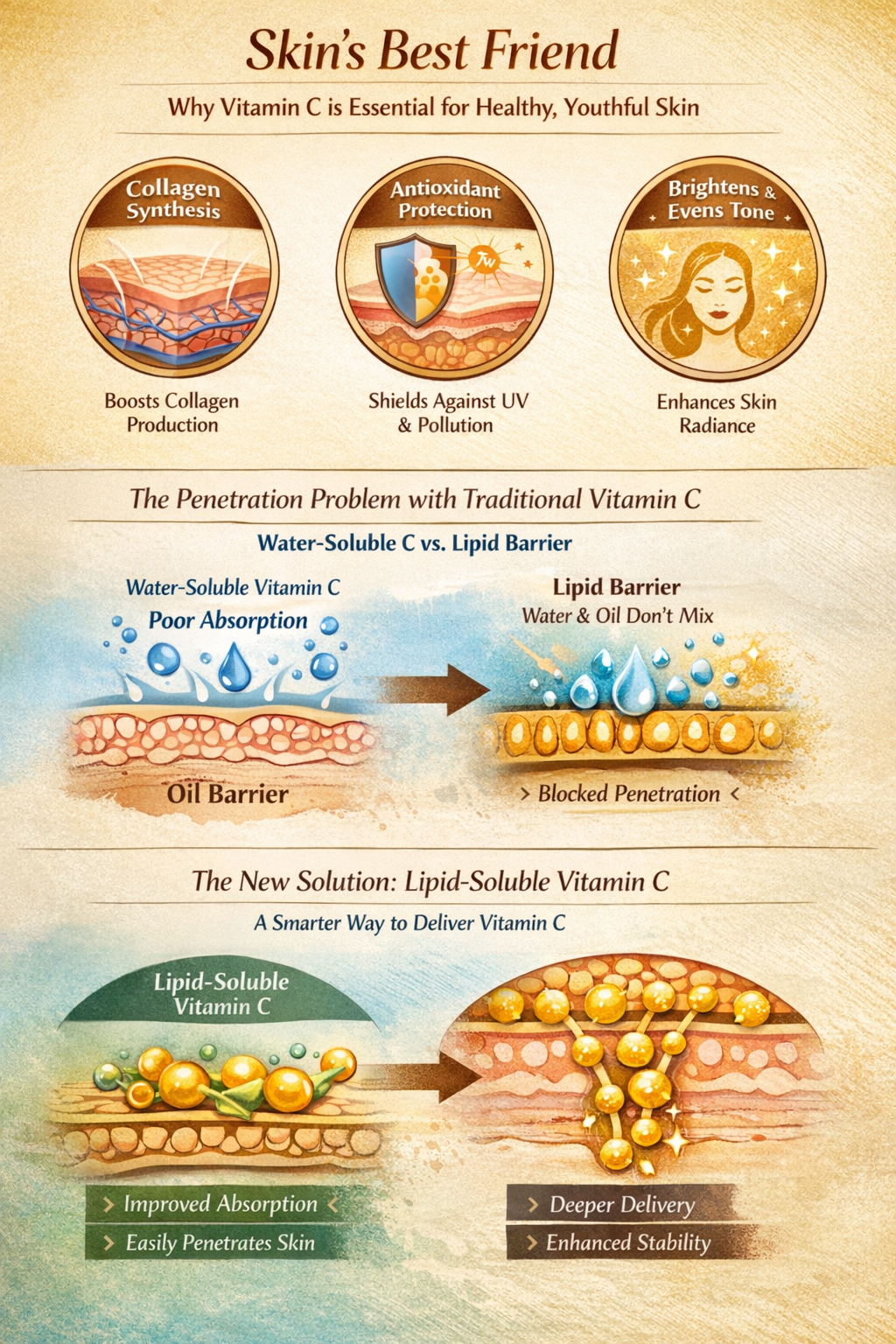
At a biological level, Vitamin C performs three fundamental functions that directly influence how your skin looks and behaves.
Collagen Synthesis
Vitamin C acts as the essential engine behind collagen production. Collagen is the structural protein that keeps skin firm, plump, and smooth. Without adequate Vitamin C, collagen fibres cannot form properly — and without collagen, skin gradually loses elasticity and structure.
Antioxidant Protection
Every day, your skin is exposed to ultraviolet radiation, pollution, and environmental stressors that generate free radicals. Vitamin C serves as a powerful antioxidant shield, helping neutralise oxidative stress before it damages cells and accelerates visible ageing.
Brightness and Tone
Beyond structure and protection, Vitamin C contributes to radiance. By supporting cellular repair and protecting surface layers from oxidative dullness, it enhances the skin’s natural clarity and luminosity — that subtle “health halo” we associate with vibrant skin.
If you’re curious about how Vitamin C drives collagen synthesis at the molecular level, how it regenerates other antioxidants, or how it contributes to a brighter complexion, subscribe below. In upcoming articles, we’ll explore each of these mechanisms in depth.
The Biological Wall: Why Traditional Vitamin C Struggles
Despite its remarkable benefits, traditional Vitamin C presents a significant challenge when applied topically.
Here’s why.
Vitamin C, in its natural form, is water-soluble. This means it dissolves easily in water — which is perfect for circulation in the bloodstream — but problematic when it comes to penetrating the skin.
Your skin’s outermost layer is rich in lipids — oils and fats that form a protective barrier. This barrier is essential for preventing dehydration and shielding you from external aggressors.
But there’s a catch:
Oil and water do not mix.
Water-loving molecules like traditional ascorbic acid struggle to pass through this lipid-rich barrier. As a result:
Penetration can be limited.
Much of the ingredient may remain near the surface.
High concentrations are often required to see visible results.
Low pH formulations can cause irritation in sensitive skin.
The molecule itself is notoriously unstable, oxidising when exposed to light or air.
So if a Vitamin C serum has disappointed you, the problem may not be Vitamin C itself.
It may be the delivery system.
The Future of Delivery
Modern skincare science has focused intensely on solving this “water-versus-oil” dilemma.
Rather than abandoning Vitamin C, researchers reimagined how it could travel.
By attaching lipid components — often derived from fatty acids such as palmitates — to the natural Vitamin C molecule, scientists created a version that feels more at home within the skin’s lipid environment.
This modified form integrates more comfortably with the skin barrier, penetrates more efficiently, and offers improved stability compared to traditional ascorbic acid.
In essence, it is Vitamin C redesigned for modern skincare performance.
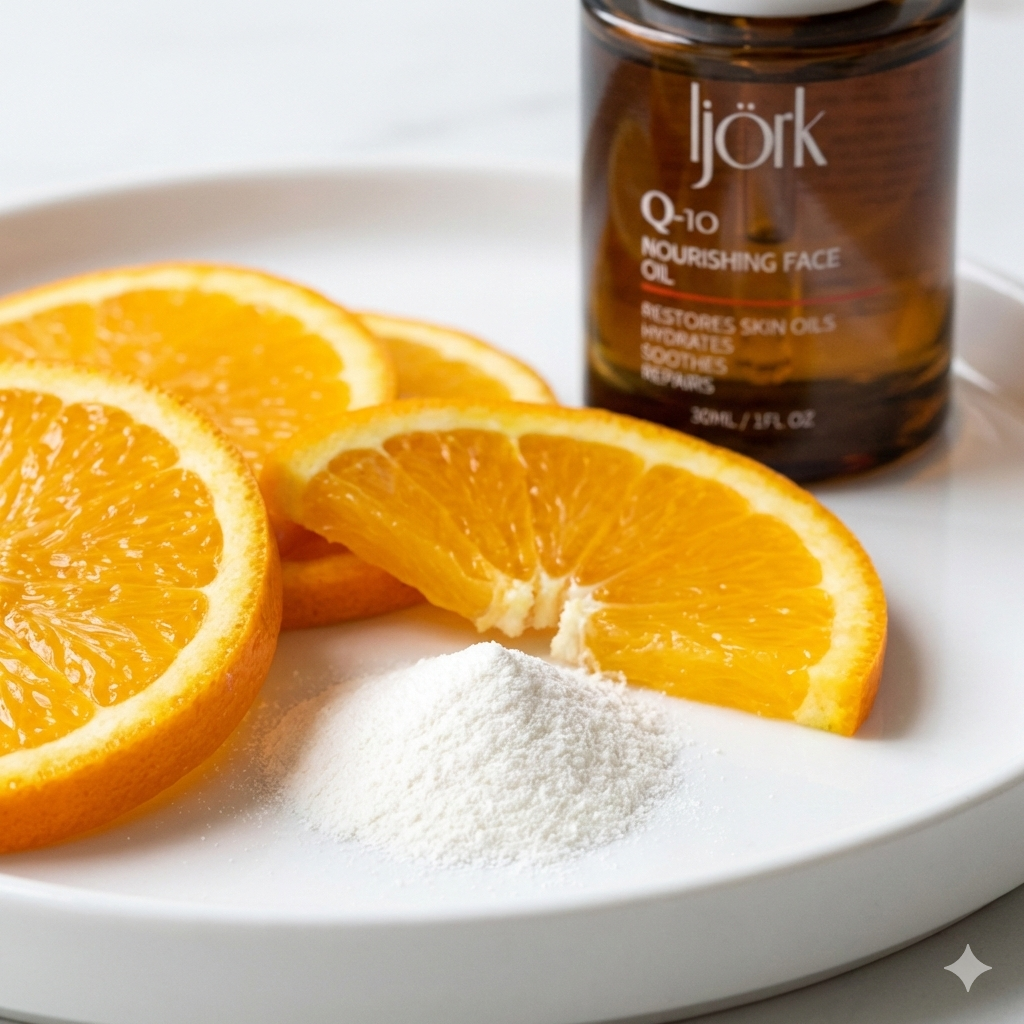
This advanced, liposoluble form is the version we selected for our Q-10 Face Oil — precisely because effective skincare is not just about choosing powerful ingredients, but about delivering them intelligently.
What’s Next
In our next blog, we will explore the breakthrough world of liposoluble Vitamin C in greater depth — and explain how this “smart” evolution of a classic ingredient is reshaping the future of high-performance skincare.
Because sometimes, innovation isn’t about discovering something entirely new.
It’s about making something extraordinary work even better.